A copy-trading account and an Expert Advisor are different ways to automate trade placement. Even when a provider describes them as the same strategy, settings, allocation and execution can produce different trades and results. Compare the actual setup, costs and risks rather than assuming they are interchangeable.
How each one works
Buying the EA: you pay once (or rent monthly), install it on your own MT5 terminal on a VPS, choose the inputs, and the robot trades your account. You own the execution — and every mistake in setup.
Copy trading: you use a compatible follower account and subscribe under the platform's terms. The service determines trade allocation, setup requirements and fees; copied orders can differ because of execution, minimum volume or account conditions. Check the current fee basis, charging interval and treatment of losses before subscribing.
Cost over a year
Illustration only, not current Quantora pricing or a return forecast: a $150 one-time EA licence plus a VPS at $5–15 per month totals $210–330 in the first year. The VPS still costs $60–180 per year afterward; licence renewals, rentals or other service charges may also apply. Broker trading costs are additional.
For a separate hypothetical copy service charging 35% of eligible profit, $600 of eligible profit produces a $210 fee, and $6,000 produces a $2,100 fee. The first fee equals the low end of the illustrative EA's first-year cost; the second exceeds that range. These examples assume eligible profit is already determined under the service's rules and exclude other copy-service and broker charges. They do not predict that either profit will occur.
There is no universal $1,000 break-even balance. Compare the actual licence or rental price, hosting costs, fee basis, charging periods, losses and account conditions over the same period. A lower cost does not establish a safer or more profitable choice.
Control and customisation
An EA may expose lot size, trading hours and exit or risk controls, depending on the product. Check its supported account types, minimum volume and actual inputs rather than assuming a cent account or a small lot size makes it suitable. Copy-service controls also vary; review allocation, exposure limits and stop-copy behaviour on the specific platform.
What goes wrong with each
- EA: wrong inputs, terminal downtime, duplicate installations and over-sizing can disrupt execution. Software faults, broker conditions and market risk remain even with a careful setup.
- Copy trading: slippage between the master and your account (worse with wide spreads or small balances), the provider changing strategy without notice, minimum balance requirements, platform downtime.
- Both: strategy losses and drawdown remain possible. Allocation, execution, slippage and account conditions can make follower drawdown differ from the provider's; a past maximum is not a limit on future losses.
Compare the source records and account conditions
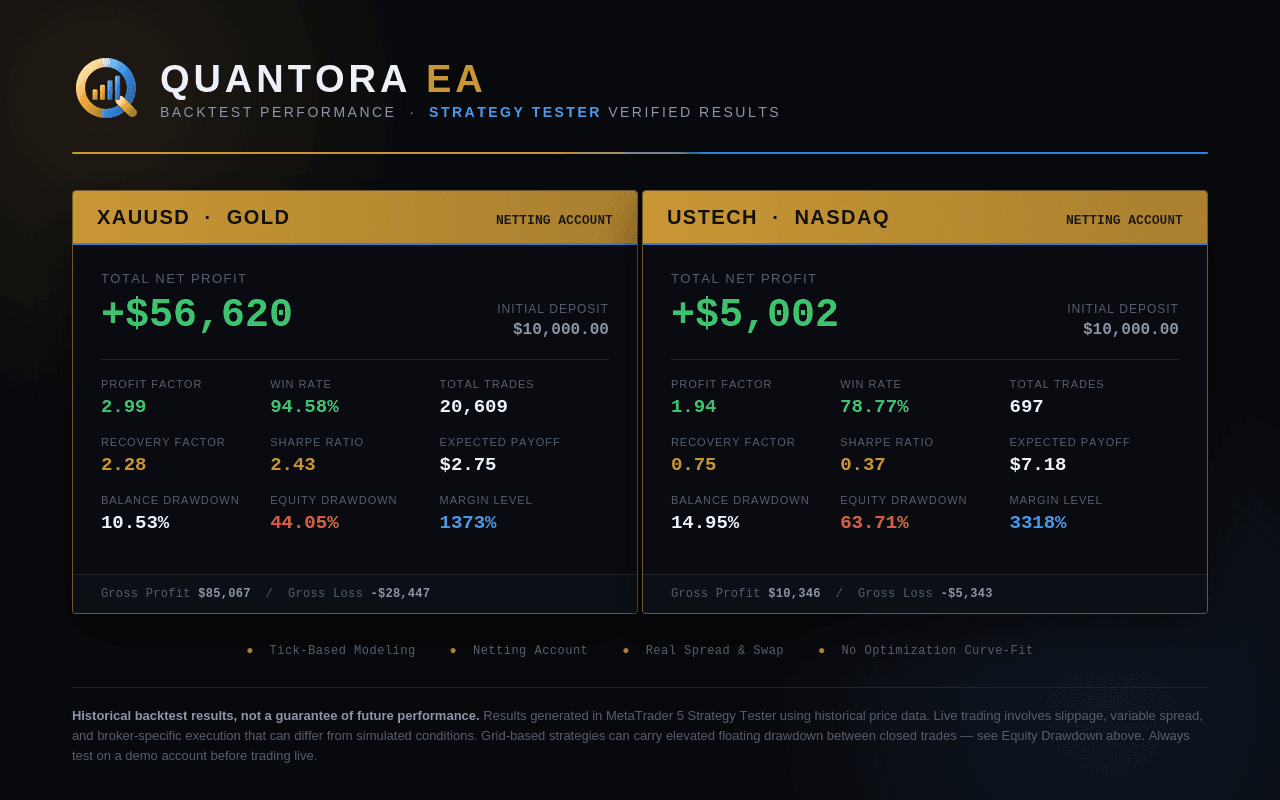
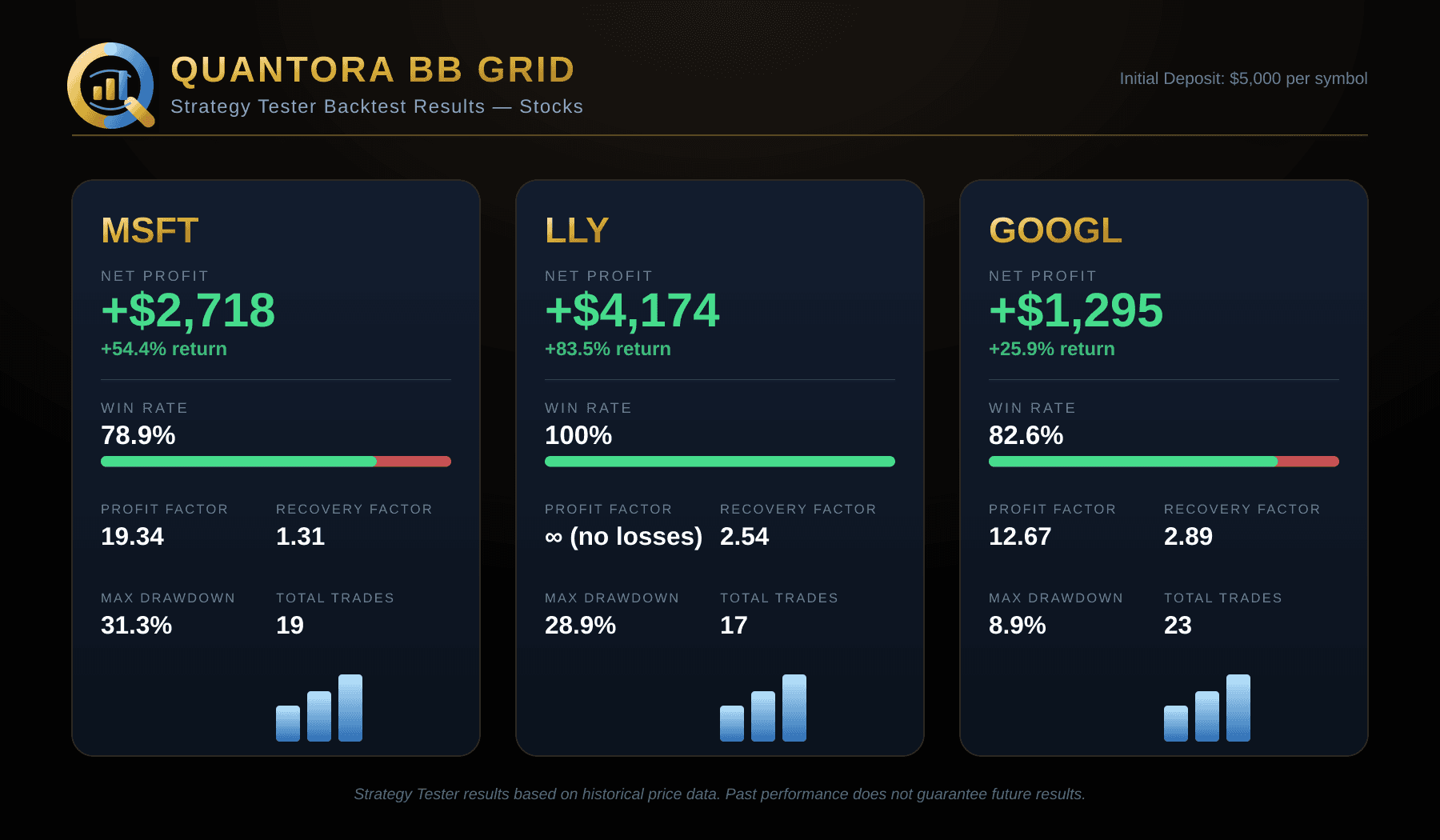
Check each record's source, dates, settings, account type and reporting method before comparing returns or drawdown. Quantora's Copy Trading page links to listed third-party broker and platform profiles, while the Results page links to available Myfxbook records for tracked software strategies. These are different evidence sources; similar strategy names do not establish identical execution or outcomes.
Which to choose
- For copy trading, confirm eligibility, setup, allocation, total fees and how to stop copying before funding a follower account.
- For an EA, confirm platform and broker compatibility, available risk inputs, hosting and total licence or rental costs.
- If uncertain, use a supported demo or trial to test the setup. Compare equivalent reporting periods and assumptions; a short test does not establish future performance.